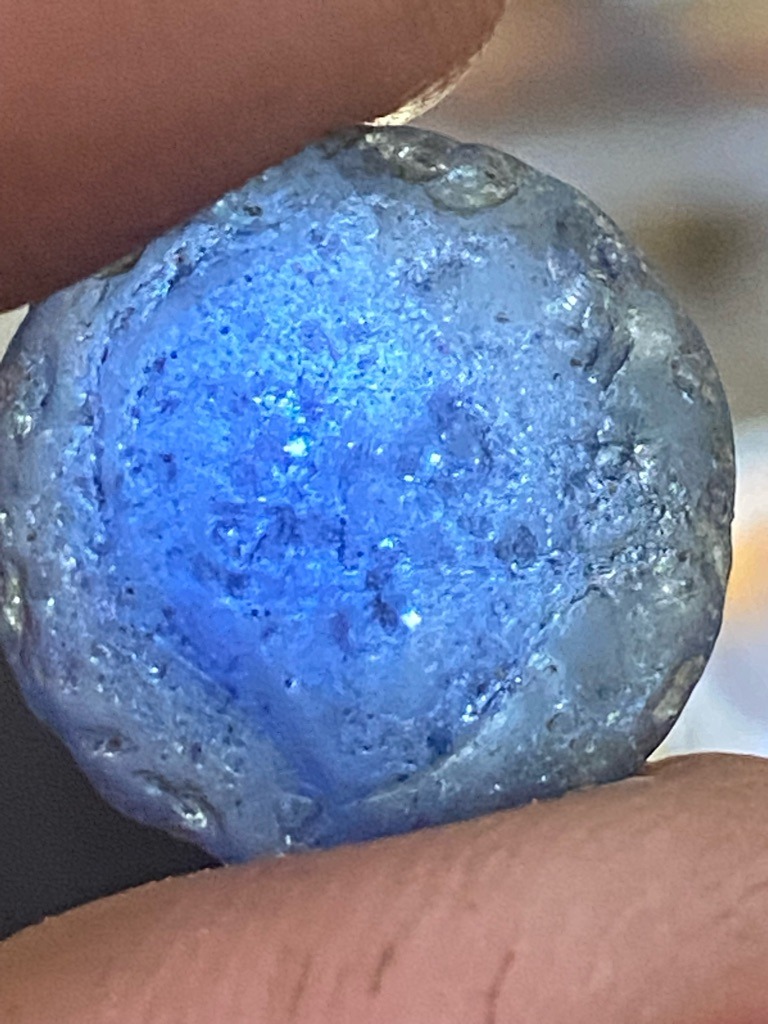
Natural rough diamond, specifically a Type Ib or Type IIa fancy blue crystal
Natural rough diamond, specifically a Type Ib or Type IIa fancy blue crystal · Rough crystal / Uncut natural dodecahedron or rounded octahedral form
Not Applicable (Uncut Rough) Cut
Carat
Estimated 8.5 to 11.2 carats based on visual size relative to fingers
Color
Fancy Deep Blue to Fancy Dark Blue
Clarity
Included (I1-I2 level, typical for rough industrial or natural colored fancy rough)
Shape
Rough crystal / Uncut natural dodecahedron or rounded octahedral form
Overall Assessment
An impressive and rare specimen of a natural blue rough diamond crystal holding significant potential for either mineral collection or high-end bespoke lapidary work
Cut Quality
Not Applicable (Uncut Rough)
Brilliance
Low to moderate due to rough unpolished exterior diffusing light
Fire
Obscured by rough surface and deep blue body color
Scintillation
Minimal in current rough state; will dramatically increase upon cutting and faceting
Proportions
Natural unmodified crystal proportions; heavy depth ratio typical of unworked rough
Symmetry
Natural asymmetrical crystal growth with rounded edges
Polish
Raw, unpolished natural crystal skin with pitting and trigons
Fluorescence
Strong to Very Strong Blue under UV light excitation (common in many natural blue rough stones)
Inclusions
Cloudy zones, pinpoint inclusions, and internal feather fractures typical of natural rough
Blemishes
Natural surface pitting, rough skin, growth lines, and resorption features
Origin
Likely alluvial or primary kimberlite pipe origin (South Africa, India, or Brazil historically known for blue rough)
Treatment Detection
No signs of artificial treatment or coating; appears entirely natural
Estimated Value
Variable depending on exact nitrogen/boron impurities and weight retention after cutting; potentially valued in the thousands of dollars as a rare rough specimen
Certification Estimate
GIA Colored Diamond Origin Report expected if certified
Investment Potential
High potential as a rare collector's specimen or custom investment piece due to scarcity of natural blue diamonds
Similar Diamonds
Comparable natural colored rough diamonds from major auction houses or specialized rough diamond dealers
Setting Suggestions
Can be custom-set in its raw form using a secure wire-wrap or bezel setting in platinum or white gold, or faceted into a cushion or round brilliant cut
Care & Maintenance
Store separately in a soft pouch to avoid scratching other gems; clean gently with warm soapy water and a soft brush
Interesting Facts
Natural blue diamonds owe their rare coloration to trace amounts of boron trapped within the carbon crystal lattice during formation deep within the Earth