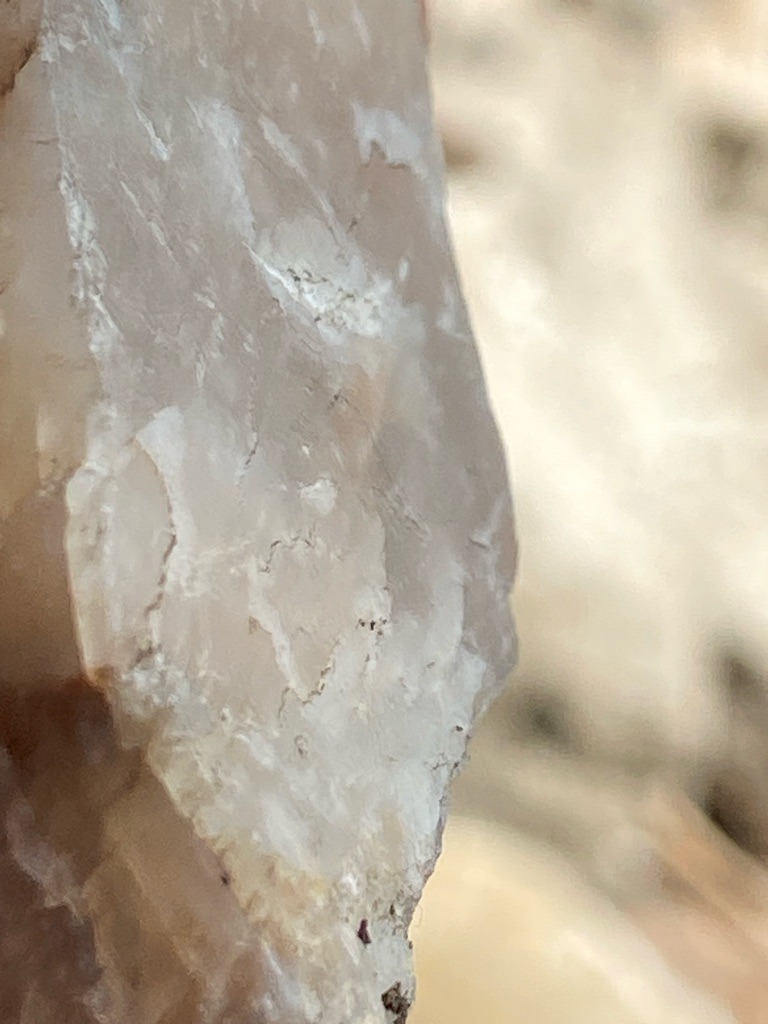
The provided image displays a rough, unprocessed crystalline mineral specimen, likely quartz or a similar pegmatite host rock, rather than a polished diamond gemstone.
The provided image displays a rough, unprocessed crystalline mineral specimen, likely quartz or a similar pegmatite host rock, rather than a polished diamond gemstone. · Irregular rough crystal form, unpolished and uncut
Not applicable (uncut raw mineral) Cut
Carat
Not applicable for a rough geological specimen of this nature
Color
Translucent to milky white with brownish-orange matrix undertones
Clarity
Heavily included with internal fractures, cloudiness, and mineral impurities (opaque-to-translucent rough)
Shape
Irregular rough crystal form, unpolished and uncut
Overall Assessment
This is an unpolished, raw mineral specimen—likely quartz or a related pegmatite matrix—rather than a faceted diamond. It exhibits natural surface textures, internal inclusions, and irregular growth patterns typical of raw earth minerals.
Cut Quality
Not applicable (uncut raw mineral)
Brilliance
Low, due to the translucent and unpolished nature of the rough stone
Fire
Absent, as raw minerals lack the precise facet angles required for dispersion
Scintillation
None, given the absence of polished facets and symmetrical light return
Proportions
Not applicable to raw mineral formations
Symmetry
Natural crystal growth symmetry, highly asymmetrical in its current rough state
Polish
Raw, unpolished matrix surface with natural fracture planes and striations
Fluorescence
Unable to determine without UV testing; likely inert or weak
Inclusions
Numerous internal feathers, fractures, and foreign mineral inclusions characteristic of raw quartz or pegmatite
Blemishes
Natural surface pitting, rough patches, and growth irregularities
Origin
Natural terrestrial geological formation, likely from a pegmatite or hydrothermal vein
Treatment Detection
No signs of artificial treatment or enhancement; completely natural as-mined condition
Estimated Value
Minimal commercial value as a decorative mineral specimen or collector's raw rock
Certification Estimate
Standard geological specimen identification rather than a diamond grading report (GIA/AGS do not grade rough quartz)
Investment Potential
Negligible financial investment potential; valuable mainly for educational or decorative purposes
Similar Diamonds
None, as this specimen is not a diamond
Setting Suggestions
Wire-wrapped pendant setting if kept in its natural raw form, though typically displayed as a raw mineral specimen
Care & Maintenance
Clean gently with warm soapy water and a soft brush; avoid harsh chemicals and sudden thermal shock
Interesting Facts
Raw mineral specimens showcase the natural geological crystallization process before human lapidary work transforms them into gemstones